
i'm with jvo at a web 2.0 seminar in nashville, which raises some funny issues for me about life and ministry and the movement of god within.
one of the big ones? i still don't feel like i can be totally honest on a blog...just like i don't feel like i can be totally honest with most people.
by honest, btw, i don't mean i'm deceitful...just that i keep much of my thinking to myself. i try and keep my opinions to myself (by and large) because i'm naturally a contrarian, a deconstructionist, and an iconoclast.
most people, however, don't have the appropriate framework for understanding the ideologically desctructive fervor of their pastor; and, often, my thoughts end up being hurtful to people when i share them, rather than purely purifying in the realm of ideas, philosophies, theologies, and community dynamics.
anyways...i'm blogging my reservations about blogging while at a seminar about blogging so that i don't fully engage the material on blogging with which i wrestle philosophically (though, for now, i'll keep some of those thoughts to myself).
Tuesday, May 06, 2008


Monday, April 28, 2008
off to navpress
this is a busy travel season for me (6 trips in 8 weeks), but i'm excited about the possibilities this next trip to colorado springs holds for me. i'll be spending most of the next three days with my friend caleb and the team at navpress, a sizeable publisher focusing on spiritual formation in christian spirituality, as we talk through a potential series of book/teaching concepts.
i believe strongly in what i'm doing these days - and, by extension, in much of what we are doing at westwinds - and the fact that god may use some of these things to help others is both humbling and exciting.
thanks for your prayers, all
i believe strongly in what i'm doing these days - and, by extension, in much of what we are doing at westwinds - and the fact that god may use some of these things to help others is both humbling and exciting.
thanks for your prayers, all
Saturday, April 26, 2008
slides for tomorrow's fusion

this slide shows the migration (and decline) of christianity from its origins in jerusalem upwards and westwards to its present epi-center in africa.
note that the americas do not appear on this map, but that the migration is the same. it flourished in north america, has largely declined, and now finds its center in latin america.
 similarly, this slide shows the movement of christianity beginning in the southern hemisphere, moving north, and now rapidly moving south again.

adapted from dan kimball's book (the emerging church) this slide shows the default worldview of those born into the modern world.
for me, and people like me, this basically represents the way our parents think about the world and about church.
it is not wrong.
the slide merely depicts their "defaults" which are very different than my own/our own.

again, from kimball.
this slide shows the defaults of most of my peers; and, more significantly, the default of MOST EVERYONE who will be born from now on (until the next major cultural shift).
this is important because it means that this is the default view in which our faith must be inculturated with increasing saturation in the future.
meaning, if you're wired the other way you'd better - at least - become familiar with this so that you know what you're up against.
some may say that their kids, or even their youthful peers, do not have these defaults. they are probably right. my aim is not to say that everyone has these, just that an increasing number of people are born into a world which values these things (over the other things). there will always be exceptions to this. but the exceptions don't make the rule. the world is headed this way and we must learn how to live as followers of jesus in it.

this slide shows how these two defaults overlap. we are not wholly in a world of pluralism etc. yet.
for as long as i'm alive i believe i'll be caught between these two worlds.
...but my demographic pocket will probably be the last to live in that tension, as perhaps the baby boomers were the first.
15,000 hits on ustream
...wow, i just logged onto ustream to review our loveshack gathering and notices that 14,334 people have watched fusion online.
wow.
we have a weekly attendance of adults and children at westwinds of approx. 850 people.
every week our p/vodcast is listened to by about 1500 people.
and our video of fusion has impacted almost 15,000 people.
now, keep in mind that westwinds is in jackson, mi (pop. 30,000 + ) and if we're famous for anything here, it's for closing down factories and closing up shops we only opened 3 months ago.
so for us to have such an impact is truly a miracle.
our thanks goes to god for this, but also to the many hundreds of people who've been faithful to westwinds (through all our ups and downs) for years.
thank you, long timers, for stickin' it out with us.
i knew that was good stuff...
i love to read
my two great literary loves are science fiction and theology (which explains 'beneath still earth', if you've had the privilege/nightmare of reading it).
over the course of my life i've often begun thinking about something in the bible, something i've not heard articulated before or something i think we've missed out on as a church.
for example, in the mid-nineties when all the world was goo-goo about generation x i began to think that there was something more going on than just a generation swing. i did some work and arrived at the conclusion that "postmodernism", that giant of epistemology/literature/architecture was - at least - subtextually involved.
also, about five years ago i began to think that the way we talk about salvation needed an overhaul. i had done too many alter calls producing no-alterations, and asked for too many people to accept jesus as their lord and savior who did so...but not really; so, i began to investigate ignatius, athanasius, and chrystostom and - lo and behold - found my efforts at working with theosis to be far more successful (in both the long and the short run) than my efforts at substitutionary atonement (and, yes, i am aware that "my efforts" are all but insignificant when compared with the work of the spirit upon someone's life...so, all of this is only relevant insofar as it compares to my shred of contribution)
also, about two years ago i began to think differently about "the world" and we did our series "kosmos" at westwinds about God's dream to redeem the earth not just blow it up
anyways, i say all of that to say that i've always felt surprised/validated to find out that others are thinking the same things i'm thinking - all over the world, from every denomination and tribe. usually, i find this out after i've been called a crack-pot by few local-yokels, but still it feels good to know i'm not nuts.
my recent time at q
along with the following books i've just read
finding our way again
recovering the scandal of the cross
missing the mark
surprised by hope
anyways - it's been cool to find out (after the fact) that somehow, somewhere, god has been speaking to complete strangers along the same lines as i've heard him speak to me.
Friday, April 25, 2008
sleepy, tired, poor
i've just finished a 3 day stint racing to finish our next teaching atlas. in the past 72 hours, i've slept 6.
(so...if you fall asleep while i'm preaching sunday, i will harm you...not because of insult, but because of envy)
anyways, while working away i was stymied a few times by lack of creativity. now, that's a little weird because creativity is usually sorta my thing.
but when you're tired
and pressed for time
and feeling a little anxiety
creativity tends to get a little shy
why then got me thinking about our extraordinary staff at westwinds - ben, lori, norma, angie, 3-headed-monstoriolis - and how pressed, tired, and anxious we've been since [a] first learning of randy's cancer, [b] having to lay off half our [previous] staff, and [c] learning [again] about randy's cancer.
coupled with the financial wormhole we've been in since 2004, it's no wonder that our staff is feeling sleepy, tired, and poor.
usually, when you have no money you can compensate by coming up with creative alternatives to the things you'd spend your money on if you had it. you can make cool art for your house instead of buying it, write your own stories instead of getting the latest bestseller, play outside instead of going to the movies etc.
usually, when you have no time to do everything you need to do you can compensate by coming up with creative solutions that allow you to do the most important, most invigorating things first without totally letting everything else suck.
usually, when you're in any kind of a bind the way out requires creativity.
our staff excels at creative solution-making, expression, relationship, and liturgy.
it's why i love them so much.
but...i can't help wondering how much longer we'll have to trade on ONLY our creativity before it runs out like the money, like the time, and like everything else.
if creativity is always our compensation package,
what happens when we deplete our resources for creativity?
this, by the way, is why we value creativity SO HIGHLY at westwinds
why we celebrate it
and why we look for staff to continue cultivating it
because, at the end of the day, it's the only thing we have to work with
Thursday, April 24, 2008
atonement (fusion series)
our next fusion teaching series was going to be about a four week look at genesis 1-2, but we felt led in another direction.
which means i've had to cram about three months worth of work into about 4 weeks. it's cool, though, 'cause i believe it's the right choice.
anyways - we're trying to be a little smarter about how we do the teaching atlases (specifically in terms of man-hours for angie + norma) so we're using blurb this go-round to see if we like it. the problem, though, is that there's a price-point at a certain number of pages...so i've had to cut some things out.
they're reprinted below if you're curious
Parables, Testimonies, & Prayers
This Teaching Atlas contains several subsections of genres other than (pure) theology. Allow me to briefly articulate my rationale for why (and how) I've included them here.
PARABLES
I've often been bothered by the separation of the church and the academy ñ meaning, it bugs me how 'dumb' we can be in the church.
Once upon a time, theologians and academics helped pastors better understand the Bible, the Gospel, and the Kingdom of God. In turn, pastors would translate that understanding into ways that normal people could understand.
Things don't work like that anymore, though. Typically, pastors only learn from theologians within their own denominations, who own rehearse the pet doctrines of their tribe in increasingly monochromatic tones.
We don't read the whole Bible anymore, and (by-and-large) we ignore the people that do, those who devote themselves to a deepening understanding of the richness of scripture and God's redemptive work in the world.
One of my long-time passions has been reading and learning from the brightest theological minds. I've always tried to take the best thinking available on any given topic and bring it into my regular life as as pastor.
But the more I've invested in theology, the more I've come to understand that we are often incapable of discerning the subtle differences that make the gospel so rich.
To be fair, I think it's impossible to really ìgetî how different something is from what you've always heard in church...and yet also ìgetî how much it is the same all in 30minute chunks once-a-week.
So...here is my problem:
how do I help our people understand the rich and textured theology delivered by the best and brightest minds in simple enough ways that they ìget it?î
Well, one of the ways that has been very effective over the years is through the use of stories. Consider, for example, the story of the bridge operator whose son is caught in the gears of a bridge.
TESTIMONIES
These testimonials are real, though the names have been changed to preserve the privacy of my friends. They are the brightest spots in my ministry memory. In many ways, they are the reason I first began exploring the richness of Christís work on the cross. Time and time again I would hear people testify to Godís saving work in their lives in simple, yet unfamiliar (evenÖ ëunChristianí) ways. It became obvious to me that God was doing something beyond my theology; so, equally obvious, I recognized my need to dig deeper into scripture to find out what was happening in these lives and how I might increasingly facilitate similar experiences of transformation.
Each of these testimonials has a ìIíll never forget statementî that, in many ways, has been the jumping off point for our exploration of Jesusí atoning work here in the Teaching Atlas.
As you read this stories, consider whether or not they sound familiar to you. Do you know anyone like these people? Have you heard others talk about faith this way?
See, in many ways, everything said here is totally normalÖbut if you look closely youíll realize that the ways these people talk about faith is not the way we usually talk about faith in church.
They have found themselves at-one with God through Jesus Christ.
But none of them ever mentioned that ìJesus Christ died for my sinsî or that ìHe paid the price.î Yet, all of them express deeply biblical and theological truths about Godís reconciliation through Christ Jesus.
I include these stories to demonstrate that God is working through many different streams of at-one-ment.
I include them prior to the theology upon which they are based to reflect their un/familiarity ñ familiar language, but unfamiliar significance. The words immediately ring true, but I had to go find them in the Bible to make sure they were ìsufficientî for salvation.
PRAYERS
These prayers are mine. I wrote them while reflecting upon the different theologies of at-one-ment weíve been studying in this Atlas.
But, thatís not to say they are mine and mine alone.
Quite the contrary ñ like many other prayers, these prayers could easily be yours, if you choose to pray them.
In fact, Iím hoping you will.
They are written in such a way as to invite you deeper into the followership of Jesus Christ; so, if youíve been following Jesus for decades they would be appropriate for you to pray ñ and, if youíve just begun following Jesus, they would still be appropriate for you to use as statements of your engagement to him.
My hope is that you will both pray these prayers (as your own), and pray your own prayers as well. Perhaps your prayers will be slightly ñ or even dramatically ñ different. Regardless, the two prayers taken together may well serve you in your efforts to know him more.
And I encourage you to do so.
Wednesday, April 16, 2008
smoke and dust web site
for a long time i've wanted to shore up each of our teaching series at westwinds by having micro-sites online dedicated to our teaching content.
finally, we've found a simple way (using apple's iWeb) to do so.
to get all our v/podcasts, notes, prayers, illustrations, and a free download of the teaching atlas (pdf) go to smokeanddust.info
or just click on the link at the top of this blog
cheers!
finally, we've found a simple way (using apple's iWeb) to do so.
to get all our v/podcasts, notes, prayers, illustrations, and a free download of the teaching atlas (pdf) go to smokeanddust.info
or just click on the link at the top of this blog
cheers!
Tuesday, April 15, 2008
podcast and vodcast
one of the really neat things about westwinds (especially lately) is how commited we are to an increasing presence on the web. what's doubly-cool is that a lot of this web-initiative is driven by our lay people; so, guys like davey buchannan and j cordova and brad kimpbell have a huge investment into making sure that we provide as many avenues as possible for people to connect with us via the internet.
so, just to list off a few, here are some of the cool venues westwinds has online:
westwinds.org
smokeanddust.info
westwinds.org/podcasting/
johnvoelzblog.blogspot.com
fogparty.blogs.com
guerillahost.org
variousparables.com
causemology.com
communityw.com
writehereandnow.com
prayground.tv
not too shabby for a hip church in the midwest, eh?
thanks for all you do - davey, j, brad!!
Sunday, April 13, 2008
vox dei: prayer in fusion
God -
Forgive me for giving up
Forgive me for giving in
to the futility of this world.
I ask for the strength to believe
in the presence of despair,
and the courage to keep fighting
even when it looks like I will lose
every battle.
For I know that
the battle is not mine to win,
but yours.
and your truest desire
is to see me contend
with every breath.
The battle I must fight in this life
is first against myself
And in that contest I feel you
cheering me on to victory.
Please give me your heart
your truth
your belief
your confidence
that I can win
that I can destroy
the falsehood within
and allow your permanence
more space inside me to grow.
Amen.
Saturday, April 12, 2008
loveshack
this past monday night at loveshack (our owner's/member's gathering) i lost my composure.
i mean it, i lost my cool. the past 13 years of ministry just kind-of erupted and my failures and my hopes just got tossed into the mix for all to see.
it was quite revelatory for me, actually...because i didn't really know how close to the surface those emotions were (or, conversely, how deeply frustrated i was feeling). knowing that i'm carrying that around all of the time is disturbing, not least because i wonder if the way i'm living is truly addressing the wells of passion inside me.
at the core of my sensation is the bother that church - any church - makes an insufficient difference in the lives of people. we don't see enough transformation. we don't experience enough proximity to the spirit. we don't align ourselves with scripture soon enough, or thoroughly enough, to give us supreme confidence that we will hear the words "well done, g+fs"
what's more, i carry with me the memories of my long friends who've dismissed god and/or been burned by god's people...such that pursuing and engaging god seems beyond all hope for them.
steve
mike
jason
jaime
and a host of loved ones whose names are even less known (though also less generic...hence my reason for not listing them) cycle through my consciousness like a playlist of concern.
i really want my friends to experience the life of god,
the life of the ages,
eternal life, begun in this one
that's not to say that they are bad or evil or degenerate, just that wholeness is obfuscated by self-priority, dry religion, and a pervading absence (both mine and god's).
i am left with a cliche restlessness that urges me to pray
and sometimes forces me to cry.
at loveshack,
as i spoke about the need for the church in the west to abandon "churchiness" and fatigued liturgical norms in favor of indigenous, innovative, new testament missional practices
my post-ecclesial-stress syndrome took over and i fell apart
i don't want to play at church
never have wanted to, but often have done so anyway
i came to westwinds to never have to do that
but have failed in championing the missional drive behind why we do what we do
i have failed to identify the reasons why some things are time-wasters and others are the foolish pursuits of cautious american christianity
in clear enough terms for our people
so, i come away from that meeting with the following resolve
1. i'm completely finished fooling around with church-y people. i've only got so much energy, and i don't want to give it to them.
2. i need to do a better, more frequent job of basic vision casting. the church in the west must change. westwinds, for the most part, is way ahead of this change; however, when i neglect to use my position to remind our people why that change is necessary and/or to call out the rest of the western church to follow suit (in their own innovative, indigenous way) things get bumpy. people forget, miss the comfort of the former ways, and complain. it's my job to tell them why we're doing this. it's my fault when they forget.
3. i can't be as cautious, or as nice, anymore. i need to give myself permission to reject some things, and some people's ideas and concerns, completely (when they do not align with my specific mission and calling). this is hard, because i currently listen to everyone who speaks about everything with (what i've previously erroneously regarded as) christ-like patience. i realize now that my willingness to listen is often simply a control mechanism - where i pretend to appreciate what is being said and respond placatingly because i am afraid that my fury will get the best of me and i will say something hurtful. i don't want to give myself permission to be hurtful; but, i think the spirit is driving to learn how to be angry well...to express my anger without sinning...and i've never been willing to do that before.
i find myself in a new territory of faith
i'm embarrassed about my lack of self-control at loveshack, but grateful that with that humiliation comes a release.
god is dealing with me about some pretty foundational issues, and some of what i'm hearing surprises me.
my prayer then,
is for discernment
for the courage to follow
and for a posture of increased orientation and engagement with the spirit.
Thursday, April 03, 2008
fruit salad
my kids love the wiggles
you know - the musical group from oz who sing with accents about rose-eating dinosaurs and pirates with tickle-sticks?
anyway - the wiggles have this song called "fruit salad" and it's got me thinking.
life is like fruit salad.
someone else makes it for you, puts the ingredients in it, and serves it to you.
you may have to eat it, but you can pick out the bits of things you don't like.
see, there are three kinds of people in the world
1. those who pick the things out that they don't like and enjoy the rest of the fruit salad
2. those who pick out the things that they don't like and rant and rave about how ridiculous it is that anyone should ever include something like guava - for heaven's sake! - in a fruit salad
3. those who just like the fruit salad and eat every bite
but there are some funny dynamics with these fruity-salad eaters
a. those who love the salad often think that those who don't are just grouchy...but this is unfair, since the grouchy people have actually been served something they didn't like, whereas the happy salad-eater has no disruption in his fruit
b. those who pick the things out they don't like often feel smug because they are more mature than those who wig out over the bad-ingredients and think that those who love the salad are just empty-headed simpletons who WOULD behave like idiots if there was something in the salad they didn't like (this, on occasion, may even be true)
c. those who hate an ingredient in the salad may even have a point that guava should not be in a fruit salad in the northern hemisphere, being such a foreign fruit, and may feel that their legitimate gripe justifies their illegitimate temperament
so - who is the "good" fruit salad eater?
a. the one who loves it, eats it all, thanks god for it and prays for the grace to love it just as much even when there's something in it they don't like
and,
b. the one who hates an ingredient, has a valid point about why that ingredient should not be included, and expresses themselves with restraint and grace - aware of the fact that others may genuinely enjoy guava and do not want to have their meal ruined by the rantings of american-ingredient-only fruit salad eaters
and,
c. the one who picks out what they don't like, but also takes time to thank god for those who are currently enjoying their salad and to pray for those who need an extra measure of the spirit while suffering under the dictatorship of the guava
being "good" is not about your salad
it's not even about whether or not you like your salad
it's about you
and how you deal with whatever fruits you've been dealt
and how you perceive others, and have grace for others, in the middle of their meals as well.
oh...and i'm not really talking about fruit salad
prayer for the end of perfection
Lord -
I willingly let go of my need for a perfect life.
I choose to accept the difficulties, the pains, and the burdens
of this life – as you, first and also, accepted its troubles.
I choose to accept the joys of this life.
I choose to take them seriously:
to give them thought and attention,
to celebrate them and share them,
to honor them and thank you for them.
You suffered and died.
I, too, must suffer in many ways and die.
please help me to accept this
more and more every day.
You laughed and loved.
I, too, must laugh many times and love many others.
Please help me to accept this
more and more every day.
Forgive me for my failings,
and help me follow you more wholly
as I embrace the life you have given me.
Amen.
Wednesday, April 02, 2008
11, by len sweet
 Len Sweet's newest book, 11, is about the 11 'indispensable relationships' every believer needs in their life.
it's an excellent, excellent book - i've had the great privilege of reading it three times now, as i'd been asked by david cook publishers to prepare sermon outlines for each chapter of the text.
my outlines can be downloaded for free, with accompanying artwork, by clicking on the title of this post....
but - even if you don't download my stuff - you should really grab the book.
it's certainly one of his best
Tuesday, April 01, 2008
caedmon - celtic songwriter
one of the famous musicians of historic celtic christianity was caedmon. he was said to be skilled in making verse out of scripture, putting those to song, and singing them in english.
even though he was illiterate, caedmon would have someone read to him from the bible and then spend the night trying to make it work in song. reprinted here is a sample:
teach us again the greatest story ever told
in time, the carpenter began to travel
in every village challenging the people
to leave behind their selfish ways,
be washed in living water
and let god be their king
you plundered death
and made its jailhouse shudder
strode into life
to meet your startled friends
i have a dream
that all the world will meet you
and know you, jesus, in your living power
that someday soon all people will hear your story
and hear it in a way they understand
prayer + theology
our last 3-4 fusion/experiences we've concluded with a prayer written/displayed on our screens.
in many ways, those prayers are part of our design to help move people closer to god. see, whether we've been christians 'all our lives' or are just beginning to follow jesus, we all need to take steps every day to get closer to god.
every day
all of us
more steps
every day we must willingly engage the spirit of god and surrender control of some other aspect of ourselves (or, perhaps, re-surrender something we've previously surrendered...and then taken hold of once more).
so, our prayers have been simple prayers that have tried to convey that sentiment.
we're trying to get everyone to engage jesus a little more.
but - it has been pointed out - these past few prayers haven't used "jesus", but "god"
so, someone asked me, is it enough to pray to god (and not specifically jesus)
well - that's kind of a loaded question
one the one hand - yes!
we pray to the father, by the son, through the holy spirit (that's our technical direction as per the NT)
and when we pray and ask god for greater understanding of him, we can have confidence that he hears us and takes us at our intention (regardless of whether or not we botch up our prayer grammar...as per the teachings of jesus: which of you, if he asked his father for bread would expect a serpent in return?)
then, on the other hand - no, it's not really 'good enough' just to pray to some non-specific deity
we're christians
christ-followers
little christs
we don't follow the 'great spirit' or the 'all-knowing one' or one of the many gods out there
we follow jesus christ, incarnated deity, firstborn over all creation, above whom there is none other, by whom all things are created, in whom we live and move and have our being, etc., yada, and all the rest.
sometimes i get so overwhelmed while preaching that all i want to do is just stop whatever i'm saying and start saying 'jesus'
over and over again
it's my pentecostal roots, i think
everything i'm doing i'm doing for him - even working at westwinds has little to do with westwinds and everything to do with serving and engaging jesus.
jesus.
jesus.
so it breaks my heart when someone wonders whether or not we're prayer to/about jesus, because - for me - there's no other option. if i ever truly neglected jesus with my teachings or with my affections, i'd be unable to bear that.
it would kill me if that were true.
i am quite certain, however, that it's not true. though (in the case of our current study of ecclesiastes) we rarely incorporate the person and work of jesus (because he hadn't been born when the text was written and we can only honestly introduce him in the text when the text suggests it) in our messages, that doesn't mean that our prayers and our worship are not for him/to him/about him/in response to him.
him, of course, being jesus
jesus
jesus
jesus
jesus
ecclesiastes prayer
apparently, we're prayer-maniacs right now at westwinds.
here is the prayer we concluded fusion with on sunday:
god -
forgive me
i have thought too little of you,
too infrequently of you,
and too much of myself.
i have made you a bidder for my affections when you are really so much more.
you are my maker.
i have not taken life seriously,
nor have i honored you
(or even my true self in you)
with it.
help me to live differently
help me to live with integrity
help me to live with an awareness of your spirit as i follow you.
amen.
easter prayer
we concluded fusion on easter sunday with a prayer (displayed on our screens). for those who missed it:
god -
i have many regrets.
i have done many wrong things. i have hurt myself, you, others, and the world - sometimes in small ways, sometimes in greater ones.
please forgive me for all of this.
i do not want to keep fighting you.
i want your love and forgiveness.
i want to feel it.
i want to know i have it.
i willingly accept whatever it takes to know you and be known by you.
i am yours.
amen.
Friday, March 21, 2008
good friday: let it die
When David’s illegitimate son was dying, David put on sackcloth and began to fast and pray, begging God to save his son. However, messengers arrive and David learns that his son is already dead. Upon hearing this he immediately puts aside the sackcloth and prayer and goes to his house where he bathes, anoints himself, eats, drinks, then sleeps with his wife, who conceives a new life, Solomon.
When he senses that he has scandalized those around him who feel he has not properly mourned his son, David replies: “While the child was alive, I fasted and prayed, imploring God to save the child. Now the child is dead. I must move on to create new life.”
Death is a significant overture in Christian spirituality.
After all, we are dying all the time,
struggling painfully to let go of youth,
health,
daydreams,
and possible dreams,
infatuations,
romances,
honeymoons
and, in the end, of life itself.
Yet, we do not accept death.
We deny,
daydream,
mummify,
pretend,
cling,
drug,
refuse to wake up
and do everything except accept that we must let go.
Like the ancient Egyptians who reacted to death by embalming and mummifying their dead, we tend to embalm and mummify what has died in us through contemporary forms of embalming:
our youth and sexual attractiveness are embalmed through cosmetics, dyes, face lifts, pretense and lies about our age;
our wealth and privilege are buried with us through memorabilia, named buildings (we have an edifice complex) and legacy funds;
our plans are ritualized through blogs, journals, and home movies – worshipped in the religion of who we think we should have been.
This also occurs in our loves and friendships. When we first meet, when love is young, there is period of infatuation, of emotional electricity, of honeymoon. But all relationships grow and change and all honeymoons end.
Too often when the honeymoon ends the love begins to die, to grow sour, bland and resentful. Almost always a large part of the problem is the unwillingness to let the honeymoon end. We cling to it in a panic; but love and friendship, like Jesus, need to “rise on the third day,” so to speak. Our loves must ascend to new levels. They must release a deeper spirit.
This is also true for our dreams and hopes. We often go through life refusing to let go of a hope that can never be for us. When we refuse to accept that we are not as physically attractive, slim, athletic, talented, bright, unblemished, strong and connected as we would like to be, then we will always live in resentment and bitterness, frustrated and caught up in a daydream which prevents us from living by constantly saying “if only.”
This cannot endure. We must let these things die. Some things must be killed off – sacrificed, like our old selves, our former selves – the parts of us that displease God.
But do not despair – for God always gives us new life. Whenever something passes, be it youth or sexual attractiveness, something else takes its place.
See, there are two kinds of death and we need to distinguish between paschal death and terminal death.
Terminal death is the death that ends life forever.
Paschal death is death following by new life.
Terminal death is the loss of a child.
Paschal death is the loss of a child through childbirth – the child is lost from her mother’s womb, but born into the world.
We all rightly fear terminal death. It is never good. It is the condition of our broken world.
But – too often – we fear the paschal death as well. We all have little things we’re keeping alive…even though those things are killing us.
We sense that certain things we love (or once loved) are coming to an end and so we cling. It is the clinging that is the crime – clinging to the past, clinging to past hurts, refusing to be made whole again, refusing to embrace the movement of God, or Time, or Life.
We must embrace paschal death. We must let go of some thing – even some good things. This is the cry of Good Friday – something has to be sacrificed in order for us to be whole.
It is the refusal to let go that is the cause of so much unhappiness,
bitterness and despair in our lives.
We must die,
we must accept new life,
we must refuse to cling to the old
so that new life can ascend and a new spirit be given to us.
This brings new love,
new friendship,
new health,
new attractiveness,
new meaning
and new depth;
but to do this requires that we trust God.
We must trust God enough to let ourselves die.
We’ve previously spoken of the Koru fern at Westwinds. In New Zealand the Koru fern contains within it a tiny, curled frond that needs space in order to grow and live. The only way it gets that space is by the intervention of the Maori people, who walk through the bush and burn off the old growth. The Maori burn off the undergrowth in order to encourage new life.
The cycles of death and decay are the compost of new life.
None of us are whole, everyone is broken.
For more and more people there is a major something to live beyond,
some skeleton in the closet;
a broken marriage,
an abortion,
a religious commitment that did not work out,
a pregnancy outside marriage,
a betrayed trust,
a broken relationship,
a soured affair,
a serious mistake,
a searing regret;
sometimes with a sense of sin, sometimes without it.
These things hurt, but we must remember that pain is prophetic. It indicates that something is wrong - not just with the individual, but with the whole body.
What we need, perhaps more than anything else, is a theology of brokenness that takes sin and failure serious enough to redeem it.
We need a theology that teaches us that even though we cannot unscramble an egg God’s grace lets us live happily and with renewed innocence.
We need a theology which tells us that a second, third, fourth, and fifth chance are just as valid as the first one.
We need a theology which tells us that mistakes are not forever, that they are not even for a lifetime, that time and grace wash clean, that nothing is irrevocable.
As you reflect on the death Christ suffered, reflect on the deaths he is inviting you to suffer as well:
What things are there in your life that are dying?
What are you clinging to that God wants you to let go of?
What are you embalming that needs to be put to rest?
Are there hurts
Wounds
Regrets
Injustices
Furies
Resentments
That need to be let go of?
What is killing you?
What things in your life need to be put to death?
easter: the harrowing of hell
The Harrowing of Hell
[manuscript for easter fusion teaching]
Several years ago, after the pope had been heckled during his visit to Holland, a Belgian newspaper ran an editorial which commented as follows: the difference between the Dutch and the Belgians can be seen in their separate reactions to the pope. In Holland, people do not keep the commandments but they still want to be saints, so they demand that the commandments be changed. In Belgium we do not keep the commandments either, but we know that we are not saints and so we admit it and ask for redemption.
Our culture struggles with honesty, with admitting weakness.
Much within us and around us invites us to rationalize,
to make excuses,
to demand that standards be changed
or re-integrated
because we cannot live up to them.
But the failure to admit our weaknesses and acknowledge our sins is infinitely more damaging than weakness and sin in-and-of-themselves.
We should remember this at Easter. It is the time for atonement.
Easter is a time for reconciliation, a time where we remember Christ’s sacrificial death on the cross.
At-one-ment with God.
Jesus comes to us, and loves us, even though we are weak and sinful.
Jesus proved this in many ways – through his death, through his teaching, through his example, etc – but the one I’d like to focus on today is his descent into Hell.
Jesus proved his love for us by descending into hell – a theological bit of pizzazz rarely talked about, though ultimately very significant.
Here it is in a nutshell:
We believe that Jesus Jesus died and descended into the depths of Hades (Ephesians 4.8-10). He did not suffer, for his suffering was completed on the cross (John 19.30). He preached to those tormented because of their sin (1 Peter 3.18, 20; 4.4), spreading the fragrance of himself even into Hell (2 Corinthians 2.14-16). He departed (Acts 2.27, 31), bearing the keys of Hades (Revelation 1.18) and destroying Death itself (Hebrews 2.14).
The doctrine of the descent into hell is first and foremost a doctrine about love,
God’s love for us,
and the power of that love to go to all lengths,
to descend to all depths
and to go through virtually every barrier
in order to redeem a wounded,
huddled,
frightened,
paranoid,
alienated
and unfree humanity.
Do you know how much love it must take for someone to go willingly into Hell?
There is a story I’ve heard, about a man who died and was sent to hell. His brother came to the gates of hell to beg for his release, claiming that there had been a mistake. His priest came and begged for his release, claiming that man had at least as many virtues as vices.
They were both refused.
Then the man’s mother claim to the gates of hell, aching for her son. She said: let me in.
By dying as he did, Christ demonstrated that he loves us in such a way that he can descend into our private hells. His love is so empathetic and compassionate that it can penetrate all barriers (constructed either out of hurt or fear or whatever else) and enter right into our despair and hopelessness.
We see this idea expressed powerfully in John 20. Twice John presents the disciples as huddled behind closed doors, locked in because of fear. Twice Jesus comes through the locked doors and stands in the midst of that frightened and depressed group, breathing peace into them.
The image of Christ going through locked doors ought to give us a certain hope. It means that God can help us even when we cannot help ourselves. God can empower us even when we are too weak and despairing, even to open the door and to let him in.
There is a famous picture that shows Jesus standing outside of a door, the door to the human heart, and there is no doorknob for him to open. The purpose of the picture is to remind us that we must open the door and let him into our hearts. The picture is not without its merits, but ultimately what it says is untrue.
Christ does not need a doorknob.
Christ can enter through closed doors, solid walls, or through the barriers of fear and suspicion.
The picture expresses a truth about human love. In the human arena, these are the dynamics of love; unless a heart opens from the inside, human love can only knock and it must remain outside.
But that is not the case with God’s love, as John 20 depicts. God’s love can descend into hell. Unlike our love, it is not helplessly knocking at the door of fear, depression, hurt and sickness. It does not require that a person, especially a wounded and dying person, first find the strength to make the initial move to open his self or herself to health.
There is no hell,
no private hell of wound,
depression,
fear,
sickness,
or even bitterness,
that God’s love cannot and will not descend into.
Once there, it will breathe out the peace of the Holy Spirit.
So, what does this mean for you and I?
Well – to break it into digestible bits – it means that:
1. God loves us unconditionally and there is nothing we can do, sin included, that even for one second can change that. We can go to hell, and even there, God does not stop loving us.
2. It means that we live under the law of mercy, not of justice. We cannot undo, or even atone for, our sin. It must be forgiven, washed clean through Christ’s sacrificial death.
3. How do we receive that forgiveness? By opening the door? Perhaps we would be better served by another metaphor. Perhaps a better way to conceptualize it would be to have us stop fighting God.
a. Imagine that the love of God is a great wet blanket placed upon you, saturated with the sweetness of love and mercy. Instead of throwing that blanket off, accept it and live within it – let it warm you, shield you, and comfort you.
b. Imagine that God appears to you and picks you up like a child, cradling you. Stop fighting Him. Allow yourself to be held close to His heart.
If you resonate with these images – these desires – then pray with me:
God –
I have many regrets. I have done many wrong things. I have hurt others, myself, you, and the world – sometimes in small ways, sometimes in greater ones.
Please forgive me for all of this.
I do not want to keep fighting you. I want your love and forgiveness. I want to feel it. I want to know I have it.
I willingly accept whatever it takes to know you and be known by you.
I am yours.
Amen.
thanks to ronald rolheiser
this easter season i'll be drawing from the wisdom and perspective of ronald rolheiser (author of "the holy longing"). over the last six months his writings have been particularly influential, and i thought it'd be appropriate to give him some props here.
...because, you know, hermit-like catholic priests often stalk the blogs of young canadians living in exile
right?
...because, you know, hermit-like catholic priests often stalk the blogs of young canadians living in exile
right?
christ the lord: road to cana
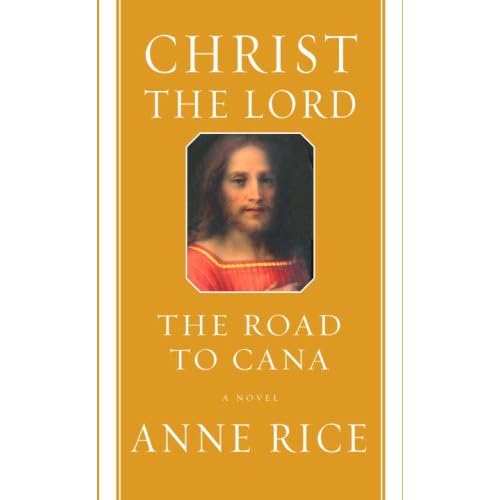
i'm so rarely moved by a book to write any kind of review or endorsement.
but anne rice's "christ the lord: road to cana" is fantastic. go buy two copies and give them away...hear back from your friends how great it is...let the anticipation build...cry, beg, and moan...then go buy two more copies and keep and read only one.
biblically consistent
scholarly credible
gripping
compelling
fascinating
and truly, genuinely, spiritually formative.
you'll notice no endorsement of "the shack" here...if you're looking for a spiritually provocative novel get "road to cana"
Thursday, March 20, 2008
souls are the sole missional province of the church (how's that for a wordy title?)
we've been having some discussions at westwinds lately about soteriology (the theology of salvation) and social justice (aka, helping people)
both are, scripturally, considered "mission" in the truest uses of the term
jesus gave us a soul-reaching/saving/reconnecting/welcoming mission
jesus gave us many missions to do good/redeem the world/love the world/help the poor
at westwinds we have done an increasing amount of really cool missional-justice things. whether that's our gals loving single mums on mother's day with reprieve; or our teens raising $$ to give away cars to families in need; or dave midkiff tackling recycling in the earth-hating community of southern michigan; or rob and wendy white purchasing a home downtown and using it for classes, giftings, and soooo much more; or our many justice initiatives through causemology (our spiritual formation portal at ww); or our advocacy for churches and pastors overseas (like cedric in cape town, dries in pretoria, phillipe and sophia, etc.); and on and on and on
i'm so proud of our church for the many ways they've come to the party to love the world as god has loved the world.
on the flip side, though, we are increasingly troubled about the mission of saving souls.
(by the way, i know that terminology has caused a lot of hiccups for people...just go with me here for a minute and any pomo hangups will be a little alleviated)
see, we understand that everyone comes to faith along a slightly different path. there is only one way to gain access to the father - through jesus christ his son - and salvation is available only through jesus; but there are many ways to find jesus.
some find jesus through scripture
some through prayer
some through a vision or a miracle
some through conversation
some through apologetics
some through friendship
some through culture, media, happenstance
etc.
at ww, we try and authenticate the spiritual journey that people are on, allowing them the freedom to be led by the spirit and to dry increasing closer to jesus. we understand our role to be to lead each person a little deeper into him.
so...whether you've been a christ-follower for 50 years or 50 minutes, we believe that god wants us all to draw closer
and closer
and closer
we call this a theology of journey, and we believe it's much more biblically honest than the raise-your-hand-if-you-don't-want-to-burn-in-hell-tonight approach or the fill-out-this-card-and-enjoy-your-best-life-now approach
but it does create some tension
for example, in the other ways of addressing salvation everyone in church gets to see who comes to faith in christ. so, if i give an alter call in fusion and 20 people every week came to the front to accept jesus, that would look really good to those who are just watching.
whereas, by inviting everyone to move a little closer to jesus, we lose the benefit of seeing one another commit.
there's much that could be said here about whether or not those who "just watch" ought to be concerned about their own motives/preoccupations...but that's not what i'm interested in soapboxing for now.
my point is that the church suffers in the absence of knowing publicly that people are being transformed.
so, even though i believe we see more genuine transformation in the lives of new christ-followers at westwinds than i ever did at the 1000-kids-a-summer-made-decisions-for-jesus-at-my-personal-evangelistic-camps
people feel less confident that that transformation in actually taking place
because they can't see it
now, on the flip side, even though we see (and hear) of a remarkable amount of life transformation, i'm still deeply concerned about us seeing more
and more
and more
in my life
in the lives of all those i know
and definitely in our church
but - for now - i'm simply blogging that our current challenge is how to get these stories in front of our people more and more frequently
because otherwise all they see are our social justice efforts
which, from the outside, look like a enthusiastic not-for-profit club (with a devilshly handsome spokesperson :)
and church, if it is any way to resemble the communities of the new testament, must be about so much more than just playing nice
hell is (not) for heroes
i've been thinking a lot about hell lately
well, for the last 6-8 months really.
the existence of a literal hell has come under some hot and heavy fire by several in the emergent community...which troubles me. i always get nervous when someone is willing to say "that thing that every christian has believed in for 2100 years (+ however long our spiritual ancestors, the hebrews, believed in it)...well, we think that thing is totally wrong now."
now, to be fair, there are teachings of the church that need to be re-worked in light of new evidence (textual, archaeological, contextual) and some of the things we thought to be beyond-discussion have turned out to be very much in discussion all along (tithing, for example, though widely practiced in christian america has NOT had a stellar history in the global, universal, practice of christian spirituality).
anyways...all that to say it's been weighing on me that some of my fellows are willing to throw the hell-baby out with the judgment-bath water.
c.s. lewis' book "the great divorce" is a novella about someone entering heaven. it's been very influential for me and i've read (and quoted) it many times.
over the years i've reflected on how much his version of hell sounds like the private hells that so many people live in today.
he makes no claim that they are the same...but he does demonstrate their disturbing symmetry. that symmetry has been a factor in other, less judicious, folks coming to the conclusion that 'hell on earth' is really the only hell scripture ever talks about; and, conversely, that 'heaven on earth' (as in the present heaven-on-earth, not the future eschatalogical one) is all we have to hope for.
others have done a far better job than myself refuting these claims. some other time, perhaps, i may throw my hat in the ring and defend these doctrines myself.
but...i've been rambling simply to get to the point that "hell" is soooo much like "hell on earth" that it's prompted me to try my hand at a fictional account of life in hell.
i've written about a minister who wakes up in his coffin, digs himself out of the grave, and finds himself trapped in his rotting corpse (as opposed to his new, glorified, body) forever in hell.
too macabre, do you think?
here is a brief sample from the second section, entitled "going down"
There are many kinds
Of people staying in Hell;
Though, none of us got along.
Everyone just lived
Like normal, hating their jobs
But working for the weekend.
No one cared either.
It’s too much effort to hate.
Lethargy insulates us.
The government is
The worst thing in the whole world,
Like froth on a mug of brine.
They pretend to work,
But they’ve been lifeless ever
Since Brutus pricked Julius.
Politicians cry
“peace, peace” when there is no peace.
There are only the pieces.
We live with worms in
Nightmares from our childhood.
They get away with murder.
more verse, and many illustrations to come
D
Saturday, March 15, 2008
carmel's superhero results...which may cause some rumors
Your results:
You are The Flash
Click here to take the "Which Superhero are you?" quiz...
You are The Flash
| Fast, athletic and flirtatious. |
Click here to take the "Which Superhero are you?" quiz...
my superhero results
Your results:
You are Superman
Click here to take the Superhero Personality Quiz
You are Superman
| You are mild-mannered, good, strong and you love to help others.  |
Click here to take the Superhero Personality Quiz
Friday, March 14, 2008
words from the tall skinny kiwi
found this interesting post from a fellow in new zealand and thought i'd reprint it here. to go to the original, go to http://tallskinnykiwi.typepad.com or click the title above and it'll take you right there
* * * * * *
Offensive language: I Think My Mother Taught Me
WARNING: If cussing and offensive language piss you off, excuse my King James, please do not read on because I WILL refer to words that are deeply offensive and yet must be mentioned if we are to have a serious and objective look at the subject of offensive language and the emerging church movement.
Interesting conversation going on this week at Monday Morning Insight. Charles Swindoll has been dropped from VCY radio station for using 'vulgar" language [including buns, heck, crap, balls] I think it was the "crap" word that got him in trouble.
Todd says . . .
"VCY alerted IFL that day that the word, “crap” is crude, uncalled for and offensive and should not to be used in a Christian’s vocabulary, let alone come from a pulpit and broadcast all over the country. VCY stated to IFL that this term Chuck used did not pass the test of Ephesians 4:29." Ingrid responded and is being backed up by Ken who is quoting Tozer and the finger wagging is happening all over.
BTW - Chuck Swindoll was my pastor in the eighties when i lived in Orange County. My wife was a missionary sent from EFC in Fullerton and we were married in that church. He is a good man and if he says "crap", then i would assume that the era of crap being a swear word has ended and people need to get used to it.
Same with "ass". In January this year, John Piper got called out for saying that God "kicks our ass". He explained later that "backside" would have sufficed, and there was much conversation [see links on Justin Taylor's blog and Wayne Grudem's response]. But, honestly, no explanation was needed. I think saying "ASS" should not ASSault anyone and is not ASinine in the slightest. But that depends who is ASking. The word is no longer offensive except to a tiny minority of people . . who are probably ASleep in ASpen. The word might even be an ASSet to poets who need to AScribe strong* words to ASSociates.
* is an ASterisk.
Its usually the emerging church that gets slammed for bad language and cussing. The most famous is Mark Driscoll who was called "The Cussing Pastor" in a book by Donald Miller and chastised by John Macarthur in his Grunge Christianity?. As I said a few days ago, Mark Driscoll is NOT offensive to the people in his congregation. Every culture and geographic location is unique and finding a universal code of non-offensive language is impossible.
Actually, the international emerging scene uses far more 'swear' words than the American. One reason for this is that English is often a second language and certain words, learned from watching Eddie Murphy movies, dont have the same impact. Ohhhh . . the things I have heard . . .
You probably have too. Not so much in emerging church evangelism, as the critics charge. Nothing trendy about cussing at all. But if your church has ever hosted an open mike night and 20 artists are plumbing the depths of their souls and expressing the results with language that fits . . . well . . you hear stuff that your mother never said. Once I was in a church meeting in Texas and a new Christian read some poetry that verbaized his repentance from a recent slip up. We all listened intently as he tearfully read out his confession, in a really loud voice, "God . . . I am sooo sorry. I feel like I have been f___d over by the devil".
What would you do if that happened in your church?
Words change. I am sure Charles Spurgeon would not talk about "n*gger entertainments" as he did in a 1891 Sword and Trowel publication. And the translators of the King James Bible would probably not employ the word "piss" (1 Sam 25:22, 25:34; 1 Kings 14:10, 16:11, 21:21; 2 Kings 9:8) for "urinate" or "to relieve oneself". The word "sucks", it was pointed out by Justin on EmergentNo.com in 2005, is no longer a deeply offensive word. Words change, just like cultures change. And applying outdated templates is not always appropriate.
But some words ARE offensive to a lot of people and the Scriptures have much to say about the way we speak and the words we choose. Heres how I see it. Heres the skinny.
Words change and their impact changes. As I already said. I see swear words as belonging to three distinct historical periods and forgive me if they are becoming cliche in these conversations.
1. In Premodern times, the most offensive words were excommunicatory in nature.
Offensive words were religious terms that threatened punishment and damnation. Its still the same in French. My French speaking friends tell me the most offensive words in their language are still along those lines of religious cursing and calling someone a "devil" In English, the words "damn" and "hell" used to have a harsh edge but have softened over time. The names of God and Christ and Joseph/Mary are often called up to create offense. In fact, the word "cuss" is related to "curse" which has religious overtones, as does the word "swear".
At Sunday School, i was told not to use words like "Geez Whiz", and "Jeepers" because they were toned down versions of swear words. There were lots of these words - "Gosh", "golly" . . ."struth" which means 'God's truth' and is still popular in Australia.
My mother was brought up in a very strict Presbyterian home and was forbidden to swear. She and her sisters said "Amster-naughtyword" instead of Amsterdam.
BUT . .. she was allowed to repeat the refrain "Eeny, meeny, miny, moe, catch a nigger by the toe . . " That was not offensive in her day.
2. In Modern times, which is where many people still live, words that cause most offense affront our personal and private sensibilities. These offensive words [explicit?] are normally associated with private body parts, bodily functions of a toilet nature, and sexual relations. The shift began in the 1800's in USA, when restrictions on language focused on sexuality. It is this era that many older people still use as a standard of the most offensive swear words. For example, as a child, I was not allowed to say "bum" or "crap" or "piss". Obviously, harsher words than these were also forbidden.
3. In our Post-modern times, as the voices of the margin dwellers and powerless have been given consideration and brought to the center, it is exclusionary language that causes most offence. Marginalizing people due to their race, gender, disability or status is about the most offensive thing you can say. Once I accidently used the word "girl" instead of "woman" - the uproar was global and the judgement swift. People still remind me of it. Mark Driscoll has also been rebuked by emerging church folk for comments that sounded misogynist. This makes him an interesting subject, as someone who has managed to offend people in at least two camps.
But I have never heard Mark Driscoll say "n*gger" like Spurgeon did . . . and I am guessing he never will. And Spurgeon wouldn't either in today's world. Despite his reputation as the cussing pastor, I dont think Driscoll is motivated to offend people. I might be wrong but I think he is more concerned with expressing the fulness and impact of what he wants to say in the everday language of his people. Are'nt we all?
Just a month ago, hip-hop producer Russell Simmons recommended eliminating "extreme curse words" from the recording industry. Which words? They were "n*gger, "bitch" and "ho". Note the absense of sexual or bodily function type cuss words. These days, no one loses their job for saying "crap" but if you say "N*gger" in USA or "Ching" in Australia or "Coconut" in NZ or "Paki" in UK then your entire career might be on the line.
In the USA a lawsuit was brought against a Southwest Airlines Flight attendant in 2003 for using this rhyme, even without saying the n___ word. What she said was "Eenie, meenie, minie, mo, pick a seat, we gotta go". Its the same refrain I used to repeat when counting.
I think my mother taught me.
[hey mum - dont worry . . you didnt know any better]
In the UK, a paper published on offensive language called 'Delete Expletives' found the word "n*gger" had the most movement - going from eleveth position in 1998 to fifth in 2000. In the same time period, the word "Paki" went from seventeenth to tenth. "Paki" in USA hardly registers as a swear word at all.
So, I guess I am saying that words still offend but those words are in a state of flux and their impact is related to what is happening in society.
And God's word is still just as applicable today as it has always been. Apart from one of the Ten Commandments (Ex 20) telling us not to use the LORD's name in an empty manner [ie, without thought or meaning, or 'in vain'], there are two passages from the Scriptures that stick in my mind:
1. Jesus warned his listeners against calling anyone "Raca" or empty-head.(Matthew 5:22). This is the kind of exclusionary and demeaning insult that makes up the harshest offensive language today in these postmodern, postcolonial times. The equivalent of "Raca" will be different in every language. "estupido" in Spanish is a very harsh word but in English it isnt very offensive. But there are plenty of insulting words that rip people's esteem to shreds and the command of Jesus remains. Lets not tear each other down with these kinds of words. Love builds up and it never destroys. Love is the language of the Kingdom and the Kingdom is more about power than words (1 Cor 4:20) so we shouldn't get too hung up with wrangling (good Texas word) over words.
2. "Do not let any unwholesome talk come out of your mouths, but only what is helpful for building others up according to their needs, that it may benefit those who listen. And do not grieve the Holy Spirit of God, with whom you were sealed for the day of redemption. Get rid of all bitterness, rage and anger, brawling and slander, along with every form of malice." Eph 4:29-31 Again, lets use words to build people up. Lets NOT use our words or our blogs for slandering others or expressing our anger. Give your anger to God and let him deal with it. Words can tear down or build up. Lets build each other up and not grieve the Holy Spirit.
Carla Rolfe has some viral-worthy advice on this and anyone who gets intoxicated with criticising and ripping down should pay attention:
"If someone is currently blessing you or has been a blessing in your walk, take the time to tell them. Call them if you can, or email them, or send a card. Find a nice way to lift their hearts and know that they have indeed blessed you and strengthened you." Go bless someone, Reflections on the Times
And when it comes to choosing words to express oneself, I try to keep in mind my audience. If i am invited to preach at a traditional church and there is a lot of grey hair in the front rows, I figure their list of bad words is from an earlier historical period than mine and the language I choose will hopefully fit the situation and will not cause offense. Why offend when we have a message to get across? But its not always easy to express oneself fully to multiple generations.
And if the person i am listening to uses a word that offends me, I will be quick to believe the best (1 Cor 13) and assume that they have walked a different path, and what i consider offensive may not necessarily be the same standard by which they judge their words.
Thursday, March 13, 2008
Sunday, March 09, 2008
fun birthday so far
i'm 31 years young today, having officially gone over the hill (version 1.0).
my friends here have been awesome - jvo rocked me by surprising me two weeks ago with foo fighters tix, brad took me to see the awful (yet still enjoyable) 10,000 BC, and craig took jake and i to the gold show.
what great friends!
p.s. i'll not be blogging about all the ways in which my wife is good to me on my birthday. she and the kids are doing fun daddy birthday stuff later today with my long-distance family (which, these days, is all of them).
Friday, March 07, 2008
quelle surprise?
i've been learning a lot about myself lately, and much of what i'm learning surprises me.
here are some examples:
i'm more of an artist than i'd previously thought, but less social
- amateur filmaking has become graphic design has become illustration has become verse
has become briolcage, has become fantasy, has become mixed-media
- in vancouver i'd had so many strong and healthy relationships i'd just assumed it was because i was such a social person...now i know it had more to do with the fact that i'd known those people for decades (insert "duh" comment here)
i'm more curious, but less confident
- i used to think i had all things ecclesial and theological wrapped up tight in a little bow...then i read the rest of the bible
- len told me that we're all at least 25% wrong, we just don't know which 25%...ha!
- i truly believe that the eastern orthodox church has a truer biblical theology than do most protestants...but their churches are small and dying and deathly inconsequential to the world...what am i supposed to do with that?
more mystical, less apologetic
- i hate fighting about theology
- i hate smarmy know-it-all bible-college students, fundamentalists, or coked-up weirdos
- i hate that i hate them...i wish that the grace i had for them was growing faster than it is...it is my great unanswered prayer
- i'm more interested in charism than i once was...but not in the ways that i see it in the world...i'm deeply invested in discovering a third way forwards (i.e. not craziness and not apathy)
more instructional, less motivational
- i wish i did a better job at challenging people to live differently, so that they heard god speaking to them directly and could respond to him
- instead i think i err on the side of being spiritually bossy...although, one of the consistent comments i get from folks is that i need to be more direct and more prescriptive...hmm...
more collaborative, less managerial
- i get excited when creating, and love to create and talk through any number of things with anyone i'm with at any given moment
- i'm not great with making sure that everyone else dots all their i's and crosses all their t's
more family-oriented, less goal-oriented
- i love my kids, i love my wife, the rest is gravy
- meaningless, meaningless, a man works all day and night to get something he doesn't have and what is it all for? no one cares about what he does...
- i've worked hard to correct this (to the way it is now, with family first) and i'm glad i can honestly say it's different
these things have caught me a little off guard. to be sure, there are others i will undoubtedly discover over the next little while...but i'd once thought i was the exact opposite in these areas. isn't that funny how much we can change?
i learned the word "processing" from randy
i've been processing a lot this week (i used to just say i was thinking about a lot of things, but i've been effected with the processing nomenclature since sharing space with ra-vo), but have been reluctant to blog about any of it.
i actually think that i have more weird thoughts about blogging than about almost anything else, such that whenever i start wrestling with something that (typically) other people would wrestle with on their blogs i react. most of my thought processes are private. i'm not really keen on being quoted in the midst of trying to come to terms with my true feelings and beliefs...so i often wait until i've reached some internal consensus before posting anything here.
does that make sense?
anyways, one of the funny questions i get asked from time to time is about pushing boundaries - why do i push them? why do i like it? where do i get off deciding which boundaries to push? etc.
now, i'm coming to grips with the fact that no one is likely to believe me when i say this, but i'm really not interested in pushing boundaries.
most of the time i do so it's by accident or ignorance or both.
i'm just doing the best i can to live guided by and governed by the spirit. not everyone hears me talking that way all the time, so it becomes tricky for them to reconcile what they've perceived about me in public with what they get from me here or in person, but it's true.
when you're preaching, your mind is so focused on so many concerns and details and pieces of information that you aren't too concerned with reflection. you can't reflect while preaching. you have to do all your reflecting before or after teaching. teaching/preaching is the presentation of weeks (sometimes months) of thought, prayer, consideration, study, and lived history.
consequently, people sometimes make the assumption that the confidence i display while preaching is simply the inherent confidence of a strong personality. this is not true. i have a strong personality, but it's bolstered during fusion by a host of other preparations and concerns.
all that to say that, in life, i try and spend a lot of time listening to the spirit, whereas in fusion people typically only see me teaching material i've already "listened on."
so...back to boundaries...
i really don't like to push them. i don't feel like pushing them. i don't get off pushing them. it's just not my thing.
my weaknesses, though, are when i feel like extra-biblical boundaries are pushing back at me.
i won't go into it a ton, but suffice to say i exhibit an embarrassing lack of self-control whenever i feel like someone else's boundaries have been forcibly applied to me. it's something that god is teaching me about myself.
so, i repent of that anger. i ask god to continue guiding me. i ask him to reveal my blindspots back to me in increasing measure. i want to be a godly person who is correctable, humble, editable, and cautious of others' preferences...without becoming a doormat, a figurehead, or someone completely consumed by the fear of man.
top 10 items on Jacob's thank-you prayer list
every night before bed my son and i list 3 things we're thankful for. as part of our causemology wave for nov-dec i'd been writing them down (causemology is our spiritual formation thing at westwinds).
here are my top 10 favs from the little dude (discounting, of course, the many times "mommy, grandma, grandpa, papa, grandma glenda," etc. were named:
"i'm thankful for..."
10. optimus prime
9. that we played secret agent
8. charlie, my pet monkey
7. my four girlfriends - faith, madison, cecily, oliva (sorry, gals)
6. feeling happy
5. wrestling with my family
4. clapping my hands when i get excited
3. the happy tree (a big tree in our backyard that, whenever jake was sad after moving here, immediately helped him to stop crying and cheer up)
2. that jesus keeps the monsters away
1. my daddy
* i know i said i wouldn't include the obvious ones like mommy, etc. - but this is my blog for cryin' out loud... :)
Tuesday, February 26, 2008
thinking about stories, struggling with theology
i grew up thinking that theology was a fancy word for finding loopholes within the bible so we didn't have to be obedient to it.
i'm not really sure anyone taught me that, it was just sort of the swill of the lifer pentecostals that i'd overheard as a kid.
thankfully, mom and dad felt a little differently and i was encouraged to invest myself in a solid grounding in scripture and its context.
+ + + +
in parallel moments, as a kid i always wanted to be a writer. i have my own imagination and love to get caught up in other ways of looking at the world.
science fiction was my schtick - it was where all the important questions were being asked, albeit in poor prose - but sci fi/fantasy were almost universally understood by charismatics to be godless myths and old wives tales...so i tried to grow out of it.
+ + + +
flash forward 20 years (holy crap, am i really old enough to say that?) and i'm a religious 'professional,' fearful that such a label might be more fact (and interdiction) than fiction.
i love the bible, i love theology, i love to teach
but i'm caught: i don't enjoy dumbing things down, but the un-dumbed teaching i endeavor to bring really doesn't mean a ton to everybody...and by everybody i really mean i'm forced to acknowledge that at least 1/3 (please, dear jesus, let it only be 1/3) of the people whom i'm charged to serve have no idea 1/2 of the time (please, dear jesus, let it only be 1/2 of the time) what i'm talking about.
but if they did...i'm convinced it would make a difference in the way they live in relation to god, to others, to themselves, and to the world (thanks to scot mcknight for supplying the rubric here).
so...full circle...i love the bible because it changes the way i live. it connects me more deeply to jesus, makes me more sensitive to the spirit, and corrects me through the instruction and authority of the father (of course, each trinitarian person does more than this...these are just my access points).
but it hurts me when i teach the bible and it's not as transformational to others as it is to me...because some are hard-hearted, some are bored, some are simply unable to understand the gobble-d-gook i'm shooting out my mouth.
so, how do i get it to make more sense to more normal people?
again - the classical answer is that i should just speak slower, use more ordinary language, and clearly delineate every point i'm trying to make.
there's nothing wrong with that - i really have only one objection to those things: that advice doesn't feel like me.
if it's true that we're all one of a kind, and that following jesus is very much about discovering who we uniquely are in Him, then i'm forced to believe that part of my spirituality is to discover the truest possible version of myself in christ...which doesn't allow me to simply follow the conventional, professional, wisdom of how to be a more understandable pastor.
instead, it leads me to thinking about my own construction, my spiritual DNA - which i'm convinced has always been marked and inspired by story.
so i've begun to write stories - some collaboratively, some in verse, some fun, some dark. i'm just stretching my fictional muscles (pun intended) in something i've always enjoyed but recently ignored.
now, i'm not sure that i'll use stories to illustrate theology...that seems like bad storytelling, worse theology, and even worse relationship...but i do think that stories have their own theology, which speaks to us on its own terms, and that theology is shaped and governed by the inspiration of the author.
sound familiar?
anyways - i'm using this post as a way to mark my territory, as it were. however unskilled or unused, i've chosen to throw my lot in with charles williams, madelein l'engle, and c.s. lewis.
and why not?
every great writer needs bad imitators :)
Monday, February 11, 2008
i'd volunteer
my good friends mark and jaylene have recently had another child - leeallen, a baby girl.
they were saddened and torn at her birth to discover that leeallen has downe's syndrome.
after roughly a week of genuine anguish and disappointment - from one of the most grounded, spiritual, and godly couples i've ever met - mark and jaylene experienced a transformation in their outlook, their mood, and their grief.
mark put it this way to me last night on the phone: what if God has a certain number of downe's babies that must be born each year into our world...what if they just have to come, for some reason or another...their lives will be so difficult...if i knew that those babies had to be born, i'd volunteer to take one.
god knows, mark
richest blessings on your beautiful, generous, holy family
D
Thursday, February 07, 2008
found this while researching for ecclesiastes
from harold kushner's book "when all you've ever wanted isn't enough"
a rabbi once asked a prominent member of his congregation "whenever i see you, you're always in a hurry. tell me, where are you running all the time?"
the man answered "i'm running after the reward for all my hard work."
the rabbi responded "that's good if you assume that all those blessings are somewhere ahead of you, trying to elude you and if you run fast enough, you may catch up with them. but isn't it possible that those blessings are behind you, that they are looking for you and the more you run, the harder you make it for them to find you?
Sunday, February 03, 2008
theology of beauty - what???
What benefit does this have to me as a spiritual person?
There are probably four big benefits that I can immediately recognize, available to each of us who are willing to engage God in this way.
1. We allow ourselves to be opened up to the beauty around us and God’s presence in it. Consequently, we find ourselves more concerned with honoring Him in those beautiful things, thanking Him for them, and inviting Him to do something more beautiful in us.
2. Our understanding of beauty is expanded from simply ‘prettiness’ to an understanding of God’s presence in the world, such that we begin to see beauty in acts of charity, justice, and creativity.
3. We also increase our ability to see through the fake and vain beauty that much of our western world has adopted as beauty-in-truth. We see that there is more to being beautiful than simply having certain physical proportions, certain hair and clothes, and certain fame.
4. We learn how to speak to other people about what we find beautiful, which is often a reflection of our spirituality, and allows them to ask questions in a safe environment about our beliefs.
If we’re honest, many of us have no working conception of beauty as God understands it. At best, we decide what beauty is for ourselves based on what we like; at worst, we swallow the lies of sex and wealth along with the rest of the world.
For us to truly be committed to following the way of Christ, we must continually turn over our thinking selves to God to be renewed.
This series is simply one small step in that direction.
theology of beauty - how???
'how can normal people talk about the theology of beauty?'
perhaps the best thing to do in any conversation about art and beauty is to listen – to allow others to tell you what they find beautiful and meaningful – and then begin to ask yourself questions like the following:
• What about their response would Jesus approve of? What would Jesus find beautiful about their perspective?
• What do I agree with this person on? How can I affirm them in the noble and redemptive things they see here?
• Is there a similar feeling or experience that I’ve previously had that I might share with this person? Would it be appropriate now to do so?
Remember, all the beauty in the world ultimately comes from and reflects God. Don’t be afraid to talk about things you find beautiful, or to ask questions about what others find beautiful – God is present in it all.
Similarly, don’t feel the need to force God into the conversation. Ask the Spirit to guide you about when it would be appropriate, or well received, to share your own experience of faith. Be sensitive. No one like to feel like they were ‘just talking with a friend’ only to have that friend turn into a ‘bible thumper.’
theology of beauty - where????
in addition to wanting to know why we'd do a series like this, some have wanted to know, charmingly, 'where all this crap is in the bible'
sigh.
for starters...
Here is a skeleton outline of beauty in scripture:
• God creates and it is good, Genesis 1-2
• God creates Adam as a co-creator, Genesis 1-2
• God invites Adam to create (in naming the animals), Genesis 2
• God instructs the people to build the temple and make it beautiful, Exodus 24-28
• God inspires Bezalel and Oholiab to be excellent craftsman and skilled in making things beautiful, Exodus 31
• God uses Esther’s beauty for His own purposes, Esther 1-10
• God, through the author, beautifully describes love in Song of Solomon, Song of Solomon 1-8
• The Prophet Jeremiah beautifully describes pain in Lamentations, Lamentations 1-4
• Jesus speaks one of the most beautiful oratories ever transcribed in the Sermon on the Mount, Matthew 5-7
• The Transfiguration of Jesus into His glorified (hence beautiful) self, Matthew 17
• Jesus’ Passion is considered an act of beauty-in-suffering, John 19
• Paul describes the ancient Hebrew understanding of beauty in Philippians 4.8
• John witnesses the beauty and splendor of Heaven, Revelation 21-22
In addition, we might make mention of the following inherent beauty in scripture:
• the beauty of poetic language in the prophets
• the beauty of prophetic discourse in provoking people to live differently
• the beauty of St. John’s imaginative descriptions of Heaven and the End of Days
Also, we might make special mention of the fact that there was no special language in Hebrew for art and beauty, precisely because beauty was understood to be an interconnected component of every aspect of life. So, a fuller examination of the following terms may yield a greater appreciation for beauty as understood in the First Testament:
• tsebi, meaning beauty and honor
• hadar, meaning to glorify and to honor
• pa’ar, meaning to crown or to beautify
• hamad, meaning to delight in
• yafah, meaning to be fair or beautiful
• na’ah, meaning to be physically attractive
• na’em, meaning to be pleasant or lovely
And in the Second Testament:
• prosphiles, meaning pleasing or lovely
• kalos, meaning good
We should mention that no one ought to make too much of the fact that there are seven words for beauty in the First Testament (and many more appearances of those terms) while only two in the Second (and far less appearances); for any biblical scholar understands that the Second Testament authors would have felt no need to repeat every single good thing with which they still agreed from the holy texts of the Hebrew people just to prove a point.
theology of beauty - why???
many have asked why we'd "bother" doing a series like this, so i'll reprint my rationale below (taken from the intro of our Teaching Atlas)
There are four major (and perhaps innumerable minor) reasons why we’ve chosen to address the topics of beauty, creativity, aesthetics and creation in Fusion.
1. beauty is a signpost to God
Because all beauty comes from God, reflects God, and reveals God we can have conversations about God every time we see something truly wonderful. Even more significantly, independent of any conversations about beauty, God can use beauty itself to reveal Himself directly to people.
2. imagination is one of our four core values at Westwinds
While our recent series, Sweet Dreams are Made of This, focused on the permission piece of iPac (imagination, permission, authenticity, community), and many other talks have focused on being real and being in community, we realized that it has been years since we spoke specifically about the role of imagination in faith and we felt it was appropriate to do so now. In particular, we wanted to do a series on imagination that was guaranteed to have a teaching atlas provided, so we could be sure to always have that on hand at Sound Words so anyone with questions about this value could have some document to work off of.
3. we want to explain why we design our corporate experiences in the ways that we do, to foster a better understanding of our values
We do things so differently at Westwinds than at other churches, and people always ask us why. To be honest, it can be fairly tiring to answer the same questions all of the time, so we thought that a public, systematic approach, would serve to answer many of those questions once-and-for-all (yeah…right).
4. the Church in the West is severely deficient in its understanding of a Theology of Beauty; and, as a result, instead of looking for, creating, and authenticating those things that are beautiful in the world we spend most of our time concerned with the world’s ugliness. This leaves us woefully out of balance and unable to fully articulate who the source of all real beauty Is.
The Bible is an incredibly rich and varied book, with many themes and movements of God described in many, many, ways; however, much of Western theology in the last several hundred years has (inadvertently) truncated and abbreviated the Bible to be solely about Sin. While it is true that Sin is a major theme throughout scripture, it is not the only theme, nor is it either the first or primary concern of God in the scriptures.
Our role as participants with God is so often overlooked, and plays such a key factor in any biblical understanding of beauty, that we feel it deserves to be elevated to a position of equal consideration with the doctrine of satisfaction.
In this way, we’re attempting to bring together three of the main strains of 20th Century theology: Reformed theology, Orthodox theology, and Wesleyan theology. Such a unity is rarely dared, almost never hoped for, and almost never celebrated; but we believe that these three great understandings find far more harmony within the biblical text than within our varied religious traditions and, at Westwinds at least, we feel like its part of our job to try and bring them back together from their fracture.
Subscribe to:
Posts (Atom)


 Posts


